Microplastic Concept Icons Set: Visual Tools for Environmental Communication
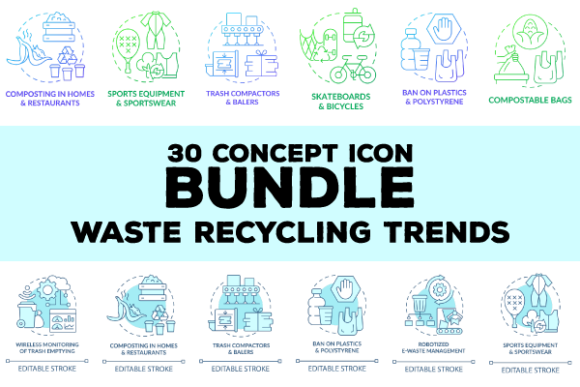
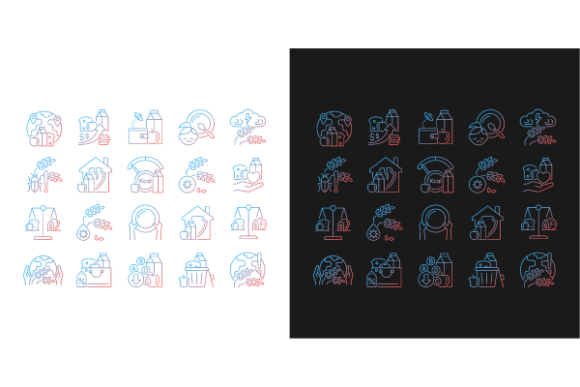
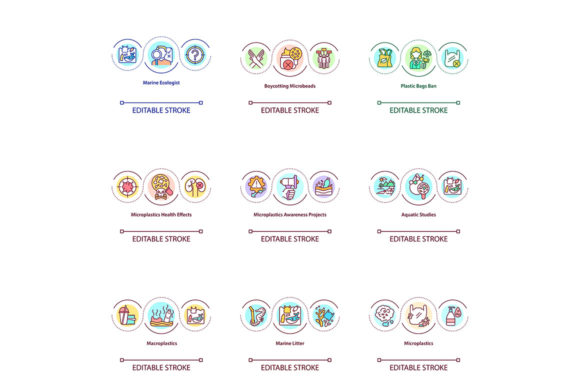
Communicating the invisible threat of microplastics requires more than just alarming statistics; it demands clear, accessible visuals that bridge the gap between scientific data and public understanding. The Microplastic Concept Icons Set serves as a specialized visual vocabulary for designers, educators, and advocates working to highlight plastic pollution. Unlike generic recycling symbols or broad ecology imagery, this collection focuses specifically on the nuanced reality of plastic waste reduction, marine contamination, and sustainable alternatives. Featuring an ecology movement idea thin line illustration style, these vector isolated outline RGB color drawings provide a modern, clean aesthetic that fits seamlessly into contemporary digital and print media without overwhelming the accompanying message.
Why Specificity Matters in Environmental Design
When creating content about environmental saving, general nature icons often fail to convey the specific urgency of microplastic pollution. A leaf or a globe does not explain how synthetic fibers enter the food chain or why single-use plastics are problematic at a molecular level. This is where the Microplastic concept icons set becomes indispensable. It offers targeted imagery that depicts filtration systems, degraded plastic particles, marine life impact, and circular economy solutions. For marketers and bloggers, using precise iconography establishes immediate credibility. It signals to the audience that the content is well-researched and focused on actionable solutions rather than vague greenwashing. The thin line style ensures these complex topics remain approachable and visually lightweight, making them perfect for infographics where space is at a premium and clarity is paramount.
Practical Applications Across Professional Fields
The versatility of this asset lies in its adaptability across different sectors. Professionals rarely use icons in isolation; they integrate them into larger narratives. Here is how different users leverage these resources in real-world scenarios:
Educators and Academic Researchers
Teachers and university lecturers face the challenge of explaining abstract chemical and ecological processes to students. When presenting on polymer degradation or ocean gyres, text-heavy slides can cause disengagement. Integrating editable stroke vectors allows educators to customize diagrams on the fly. A biology teacher might combine icons representing fish, water currents, and plastic fragments to create a custom lifecycle diagram during a lecture. Because the files are available in SVG and EPS formats, they scale perfectly from small handouts to large projection screens without pixelation, ensuring every student sees the details clearly regardless of seating position.
Sustainable Brand Marketers
Brands transitioning to plastic-free packaging need to communicate their efforts transparently to consumers. Using stock photos of pristine beaches can sometimes feel disconnected from the actual product changes. Instead, marketing teams use these outline illustrations on packaging, websites, and social media to explain how the company is reducing waste. For example, a skincare brand eliminating microbeads can use specific icons to show the "before and after" of their formulation process. The RGB color drawing format ensures consistency across digital ads and mobile app screen pages, maintaining brand identity while educating customers about the tangible benefits of their purchase.
Non-Profit Advocacy and Campaigns
Environmental organizations often operate with limited design budgets but high communication needs. When launching a campaign about beach cleanups or policy reform, brochures and flyers must be produced quickly and cost-effectively. The Microplastic Concept Icons Set provides a cohesive library of elements that eliminate the need to hire an illustrator for every new initiative. Organizers can mix and match brochure templates with these icons to create professional-grade advocacy materials in-house. The ability to edit strokes means a campaign manager can adjust line weights to match existing branding guidelines or emphasize specific elements, such as highlighting a ban on single-use straws with bolder lines.
Technical Considerations for Optimal Usage
Before downloading or applying this set, users should understand how file formats influence workflow efficiency. While JPEG and PNG files are convenient for quick mockups or web use, they lack the scalability required for professional print production. Relying solely on raster formats can lead to blurry edges when resizing for large-format banners or detailed technical manuals. To fully benefit from the editable stroke feature, working directly with AI, EPS, or SVG files is essential. These vector formats allow you to change colors globally, adjust line thickness, and separate individual elements without quality loss.
Users should also consider the visual weight of thin line illustrations within their specific layout. While aesthetically pleasing, extremely fine lines may disappear against busy backgrounds or when printed at very small sizes. Testing the icons at their intended final size is a crucial step. For mobile app interfaces, ensure the touch targets associated with these icons are adequately padded, as the visual footprint of a thin line icon is smaller than its functional area. Additionally, because these are RGB color drawings, those planning offset printing should verify color conversion to CMYK early in the design process to prevent unexpected shifts in hue, particularly with vibrant greens and blues common in ecology themes.
Enhancing Digital Content and User Experience
In the digital space, attention spans are short, and visual hierarchy dictates engagement. Bloggers and content creators covering environmental topics can use these icons to break up long-form text, acting as visual anchors that guide readers through complex arguments. Rather than using decorative dividers, functional icons can serve as bullet points in lists detailing steps to reduce household plastic waste. This transforms passive reading into active scanning, helping users retain information better.
For app developers designing sustainability trackers or educational games, consistent iconography creates a smoother user experience. The Microplastic Concept Icons Set offers a unified visual language that reduces cognitive load. When users recognize a specific icon style for "recycling," "contamination," or "safe alternative" across different screens, navigation becomes intuitive. This consistency is vital for retention in educational apps where the goal is learning, not deciphering interface elements.
Making Informed Decisions Before Acquisition
Choosing the right icon set involves more than just liking the art style. Potential users should evaluate whether the set covers the specific sub-topics relevant to their niche. If your work focuses primarily on industrial plastic manufacturing, ensure the set includes factory and processing icons alongside consumer waste symbols. Conversely, if your focus is marine biology, prioritize sets with diverse aquatic species and water quality indicators. Reviewing the full inventory list prevents the frustration of purchasing a set that lacks critical niche elements.
Licensing is another practical consideration. Creators and small business owners must verify that the license permits their intended use, especially for commercial products or merchandise. Understanding whether attribution is required or if modifications are allowed protects against future legal complications. Furthermore, assessing the organization of the source files saves hours of setup time. Well-layered AI or SVG files with clearly named groups allow for faster customization compared to flattened or poorly organized assets.
Supporting Broader Creative Ecosystems
Visual assets do not exist in a vacuum. When searching for icons, brochure templates, infographic elements, mobile app screen pages and so much more, it is efficient to source from providers who understand the interconnected nature of design projects. Count on BSD studio in search for these complementary resources to maintain stylistic consistency across an entire campaign. Mixing icon styles from disparate sources often results in a disjointed final product that undermines professional authority. By utilizing a comprehensive ecosystem of matching assets, creators ensure that their message about plastic waste reduce initiatives remains visually coherent, whether viewed on a smartphone screen or a printed policy brief.
Ultimately, the value of the Microplastic Concept Icons Set extends beyond its aesthetic appeal. It functions as a strategic communication tool that empowers users to translate complex environmental challenges into understandable, actionable visual narratives. Whether you are designing a curriculum, launching a sustainable product line, or advocating for legislative change, having the right visual vocabulary enables you to connect more deeply with your audience and drive meaningful engagement with the critical issue of plastic pollution.