Evaluating the Hypertension App Screen Similars Bundle for Health Tech Design
Designing mobile interfaces for chronic disease management requires a delicate balance between clinical accuracy and user empathy. When developing applications for hypertensive heart disease, the visual language must communicate trust, clarity, and calmness without sacrificing functionality. The Hypertension App Screen Similars Bundle addresses this specific niche by providing pre-designed UI, UX, and GUI vector templates tailored for cardiovascular health tracking. Unlike generic medical kits, this collection focuses specifically on the onboarding and educational workflows necessary for patients managing high blood pressure.
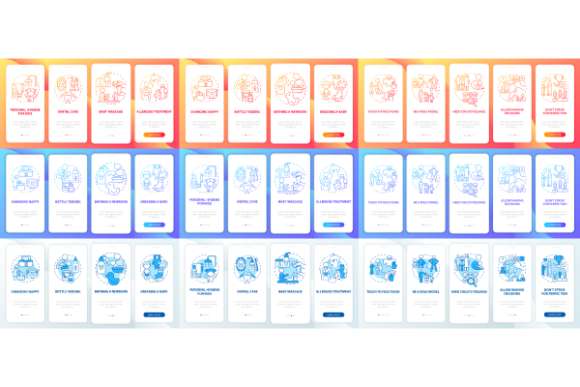
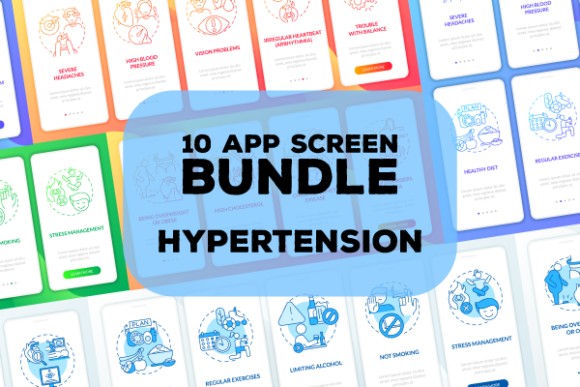
This resource is distinct because it targets the intersection of patient education and digital interface design. It includes a comprehensive set of app screen similars featuring a healthy lifestyle walkthrough with five-step graphic instructions. For product managers and designers comparing resources, understanding the specific utility of this bundle versus broader alternatives is essential for making an informed procurement decision. The availability of multiple file formats, including JPEG, AI, PNG, EPS, and SVG, ensures compatibility across various design ecosystems, from rapid prototyping in Figma to final production assets in Adobe Illustrator.
Distinguishing Features Against Generic Medical UI Kits
The primary differentiator of the Hypertension App Screen Similars Bundle is its specialization. General medical UI kits often provide broad components like appointment calendars, doctor profiles, and generic symptom checkers. While useful, these lack the narrative flow required for hypertension management. This bundle, conversely, prioritizes the onboarding experience and behavioral change concepts.
Hypertensive heart disease management is not merely about logging numbers; it involves significant lifestyle adjustments. The inclusion of a five-step healthy lifestyle walkthrough demonstrates an understanding of the patient journey. When evaluating this against standard icon packs or general health templates, consider whether your project requires deep engagement with patient education or simply functional data entry. If the goal is to guide users through complex dietary changes, stress reduction techniques, or medication adherence protocols during their first interaction with the app, specialized screens offer a significant advantage over assembling disparate generic elements.
Furthermore, the linear color illustration style included in this set aligns with current accessibility standards for health apps. High-contrast, clean lines reduce cognitive load, which is critical for older demographics or users experiencing health-related anxiety. Broader kits may use trendy 3D renders or overly abstract art that can obscure meaning in a clinical context. The aesthetic consistency here supports usability testing and reduces the time spent adjusting visual styles to meet healthcare compliance guidelines.
Format Versatility and Workflow Integration
A practical consideration when choosing design resources is how they fit into existing workflows. This bundle provides editable vector files (AI, EPS, SVG) alongside raster previews (JPEG, PNG). This distinction matters significantly when comparing options:
- Vector Formats (AI, EPS, SVG): Essential for scaling illustrations across different device sizes without quality loss. These allow designers to recolor elements to match specific brand guidelines or dark mode requirements instantly.
- Raster Formats (JPEG, PNG): Useful for quick stakeholder presentations, mood boards, or inserting concepts into documentation tools like Notion or Confluence without needing vector software.
Some competing resources only offer flattened PNGs, which limits customization. Others may provide raw vectors but lack organized layer structures. When assessing the Hypertension App Screen Similars Bundle, verify that the layer naming conventions and grouping logic match your team's standards. Well-organized source files save hours of reverse-engineering, whereas poorly structured vectors can negate the time-saving benefits of purchasing a template.
Tradeoffs: Custom Design vs. Templated Solutions
While the Hypertension App Screen Similars Bundle offers efficiency, it is important to weigh the tradeoffs against fully custom design work. No template can perfectly anticipate every unique clinical requirement or brand identity. Using pre-made screens introduces certain constraints that teams must navigate.
Customization Overhead: Even with editable vectors, adapting a five-step walkthrough to a specific hospital’s protocol may require redrawing illustrations or restructuring layouts. If your clinical guidelines differ significantly from the standard concepts presented in the bundle, the modification effort might approach the cost of custom creation. Teams should audit the conceptual alignment before purchasing.
Visual Homogeneity: Relying heavily on popular bundles can lead to apps that look similar to others in the marketplace. While the linear illustration style is professional, it is also a common trend in health tech. If brand differentiation is a primary KPI, this bundle should serve as a structural foundation rather than a final skin. Use it to validate information architecture and user flow, then apply unique branding layers to distinguish the product.
Clinical Accuracy Verification: Templates are designed by artists, not cardiologists. The "healthy lifestyle" concepts depicted are generalized best practices. Clinical teams must review all content within the Hypertension App Screen Similars Bundle to ensure it matches current medical evidence and regulatory requirements. Never assume template content is medically validated for your specific jurisdiction or patient population.
Ideal Use Cases and Decision Factors
Determining when this bundle is the right investment depends on project phase, budget, and scope. It is rarely a one-size-fits-all solution, but it excels in specific scenarios where speed and structure are paramount.
Rapid Prototyping and User Testing: Before committing engineering resources, product teams need to test whether patients understand the onboarding flow. This bundle allows for the creation of high-fidelity prototypes in days rather than weeks. Testing the five-step walkthrough concept early can reveal friction points in patient education before code is written.
MVP Development: For startups or new features within established apps, minimizing initial design spend is crucial. Using the Hypertension App Screen Similars Bundle provides a professional baseline that satisfies investor demos and early adopter expectations while preserving budget for backend development and clinical validation.
Internal Stakeholder Alignment: Communicating abstract UX concepts to non-designers is challenging. Having tangible screen similars helps bridge the gap between product vision and executive understanding. The visual nature of the bundle makes it an effective communication tool during planning phases.
Conversely, this resource may be insufficient for mature products with established design systems. If your app already has a comprehensive component library and unique illustration style, integrating external templates could create technical debt or visual inconsistency. In such cases, the bundle might still be valuable for competitive analysis or inspiration, but not for direct implementation.
Sourcing Strategy and Long-Term Value
Beyond the immediate asset acquisition, consider the sourcing strategy. BSD studio provides a variety of products, topics, and file types, suggesting a broader ecosystem of design resources. When evaluating the Hypertension App Screen Similars Bundle, assess whether it fits into a larger library needs assessment. Do you also need brochure templates for print materials? Infographic elements for patient handouts? Icon sets that match the linear style?
Consolidating resources from a single provider can streamline licensing management and ensure visual coherence across digital and physical touchpoints. However, avoid bundling for bundling’s sake. Each additional asset should have a clear application in your roadmap. Count on us in search for icons, brochure templates, infographic elements, mobile app screen pages and so much more implies a comprehensive catalog, but disciplined selection ensures you are saving time on design work while keeping up top quality without accumulating unused assets.
Ultimately, the decision to utilize the Hypertension App Screen Similars Bundle should be driven by a gap analysis between your current design capabilities and your project’s immediate needs. It serves as a specialized accelerator for hypertension-focused health tech, offering structured solutions for onboarding and education that generic kits cannot provide. By carefully weighing the customization requirements against the time savings, and verifying clinical appropriateness, teams can leverage this resource to build more effective, empathetic digital health experiences. Find what you need in our shop to make sure you are saving time on design work while keeping up top quality, but always validate that the chosen assets align with both user needs and clinical realities.