Integrating Flat Icon - Food Hotdog into Professional Design Workflows
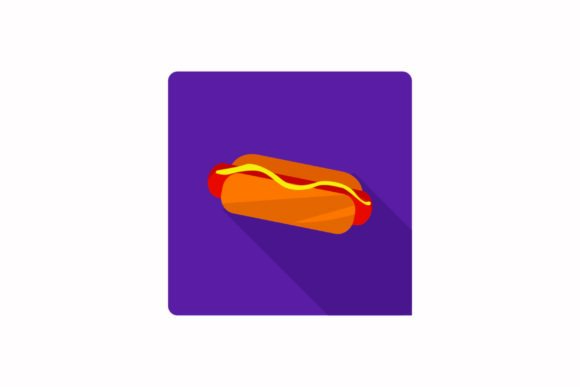
Visual assets serve as the connective tissue in modern digital communication, bridging the gap between abstract concepts and immediate user understanding. The Flat Icon - Food Hotdog is more than a simple illustration of a popular food item; it is a functional design component intended to streamline visual storytelling for culinary brands, event organizers, and content creators. When integrated correctly into a design system, this asset reduces production time while maintaining high standards of visual consistency. Understanding how to leverage this specific icon across various stages of a project ensures that your investment translates into tangible efficiency and aesthetic quality.
Strategic Application Across Project Phases
The utility of the Flat Icon - Food Hotdog extends throughout the entire lifecycle of a creative or marketing project. Its role shifts depending on whether you are in the planning, execution, or post-production phase. Recognizing these distinct applications helps prevent asset misuse and maximizes the return on your design resources.
Pre-Production and Concept Development
During the initial brainstorming and wireframing stages, speed and clarity often take precedence over final polish. The Flat Icon - Food Hotdog serves as an effective placeholder that communicates intent without requiring custom illustration work. When building mood boards or low-fidelity prototypes for a restaurant landing page or a food festival app, using this pre-made asset allows stakeholders to visualize the layout and hierarchy immediately. This prevents bottlenecks where teams wait for bespoke artwork just to approve a navigation structure or content flow. By utilizing the JPG or PNG versions during this phase, designers can rapidly iterate on concepts while keeping file sizes manageable for collaborative review platforms.
Active Production and Asset Implementation
Once a project moves into active production, the focus shifts to precision and brand alignment. This is where the vector-based formats become essential. Whether you are designing a high-resolution banner for social media or a detailed infographic explaining menu ingredients, the AI and EPS files allow for infinite scaling without pixelation. During this stage, the icon interacts directly with other design elements such as typography, color palettes, and photography. Because flat icons rely on solid shapes and minimal detail, they provide necessary visual breathing room when paired with complex food photography or dense text blocks. This balance is critical for maintaining readability in advertising materials and pitch decks where information density is high.
Post-Launch Optimization and Repurposing
After a campaign launches, assets often need to be repurposed for different channels or updated based on performance data. The versatility of the Flat Icon - Food Hotdog facilitates this agility. If an initial Instagram post performs well but needs to be adapted for a LinkedIn article or an email newsletter header, having access to multiple file formats ensures you can resize and recolor the graphic instantly. This adaptability supports long-term content strategies where visual consistency must be maintained across evolving campaigns without incurring additional design costs for every minor variation.
Technical Specifications and Format Selection
Selecting the correct file format is a technical decision that impacts workflow efficiency and output quality. Each included format serves a specific purpose within professional software ecosystems and web environments.
- AI File (Adobe Illustrator): This is the master source file. It retains all editable layers, paths, and anchor points. Use this format when you need to fundamentally alter the shape of the hotdog, adjust stroke weights, or integrate the icon into a larger symbol set within Illustrator. It is the preferred format for print production and large-format signage.
- EPS File (Encapsulated PostScript): A universal vector standard compatible with CorelDRAW, Affinity Designer, and older versions of Adobe software. The EPS format is crucial for cross-platform collaboration or when sending assets to third-party vendors who may not use Adobe products. It preserves scalability while ensuring broader compatibility.
- PNG File (Portable Network Graphics): Essential for digital interfaces due to its support for transparency. Use the PNG version for web design, app UI, and overlaying the icon onto colored backgrounds or photographs. Unlike JPGs, PNGs maintain crisp edges against any backdrop, making them ideal for social media graphics and presentation slides where background colors vary.
- JPG File (Joint Photographic Experts Group): Best suited for quick previews, internal documentation, or contexts where transparency is unnecessary and file size is a strict constraint. While less flexible than vectors, the JPG provides a lightweight option for embedding in emails or basic word processing documents.
Workflow Integration and Tool Compatibility
The Flat Icon - Food Hotdog does not exist in isolation; it must function seamlessly within your existing tech stack. For web designers, importing the AI or EPS file into Figma or Sketch allows for direct manipulation of SVG code, enabling CSS-driven color changes and hover states. This integration turns a static image into a dynamic interface element. For marketers using Canva or PowerPoint, the PNG file offers drag-and-drop simplicity without the learning curve associated with vector editing software.
In video production workflows, the vector files can be imported into After Effects or Premiere Pro to create animated lower thirds or transition elements. The clean geometry of flat design makes animation significantly easier compared to textured or realistic illustrations. By treating this icon as a modular component rather than a fixed image, editors and motion designers can extend its value far beyond static print or web use cases.
Best Practices for Organization and Consistency
Efficient asset management is as important as the design itself. Upon acquiring the Flat Icon - Food Hotdog, establish a naming convention and storage protocol immediately. Renaming generic files to descriptive tags such as "icon-food-hotdog-flat-v1.ai" prevents confusion in shared team libraries. Storing the master AI/EPS files in a centralized cloud repository ensures that team members always access the highest quality source rather than degraded copies saved from previous projects.
Consistency is paramount when mixing this asset with other icons. Before deployment, verify that the stroke width, corner radius, and optical weight match your existing iconography library. Even slight discrepancies in line thickness or style can make a professional design look disjointed. Use the editable vector files to normalize these attributes if necessary. This quality control step protects brand integrity and ensures that the new icon feels like a native part of your visual language rather than an afterthought.
Practical Use Cases for Diverse Audiences
Different professionals leverage this asset to solve specific problems. Small business owners running food trucks or pop-up stalls utilize the Flat Icon - Food Hotdog to create cohesive branding on limited budgets, applying it to menus, vehicle wraps, and loyalty cards simultaneously. Educators and trainers use the icon in instructional materials to visually categorize nutrition topics or culinary techniques, aiding cognitive retention through clear visual cues.
Freelance designers and agencies benefit from the asset’s readiness. When working on tight deadlines for hospitality clients, having a professionally crafted, multi-format icon ready to deploy eliminates hours of custom drawing time. This efficiency allows creatives to focus on higher-value strategic tasks like layout composition and user experience testing. For bloggers and influencers, the icon enhances visual engagement in recipe posts or restaurant reviews, breaking up text-heavy content and improving SEO through optimized alt-text and image relevance.
Maintaining Quality and Long-Term Value
To ensure the Flat Icon - Food Hotdog remains a viable asset for future projects, treat it as a living resource. Periodically review your usage to determine if color variations or stylistic updates are needed to keep pace with design trends. Keep the original license information and purchase receipt organized alongside the files to streamline compliance audits or client handoffs. When delivering final work to clients, include the appropriate format for their specific needs—providing a massive AI file to a client who only knows how to open Word documents creates friction, whereas providing a properly sized PNG adds value.
Ultimately, the effectiveness of this asset lies in its seamless integration into your operational rhythm. By understanding the technical distinctions between file types, respecting workflow requirements, and maintaining organizational discipline, you transform a simple graphic into a reliable tool for communication. Thank you for purchasing this product. We hope this guide assists you in maximizing its potential across your marketing, promotion, and creative endeavors, and that you find it a valuable addition to your design toolkit.